The National Flood Insurance Program and the Looming Government Shutdown
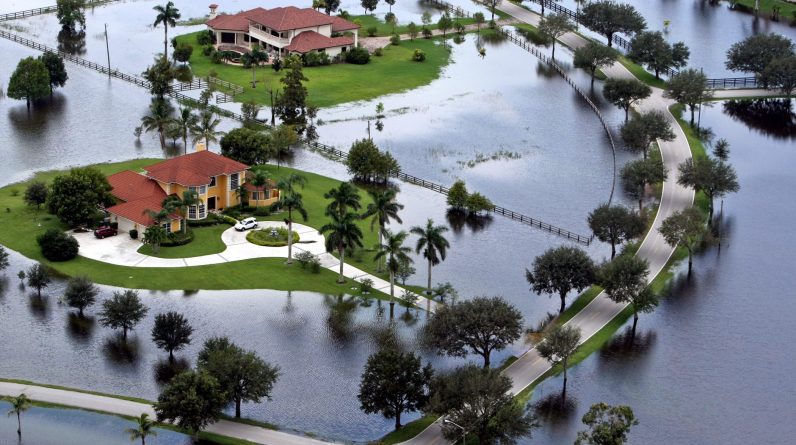
The National Flood Insurance Program (NFIP) is currently in a precarious position, caught in the crosshairs of a potential government shutdown. This situation could lead to a significant disruption that would disproportionately affect Florida, a state with one of the highest concentrations of flood insurance policyholders.
By law, Congress must periodically reauthorize the NFIP, which provides coverage for nearly 1.8 million policyholders in Florida. The last continuing resolution to fund the federal government passed on March 15, the day after the insurance program expired, and rescheduled the flood insurance expiration for September 30. However, as the reauthorization deadline approaches, concerns about a government shutdown are intensifying.
Immediate and Long-Term Impacts of Potential Disruption
In the short term, if the program expires, valid claims will still be processed. But after 11:59 p.m. on September 30, no new contracts can be written. This poses a problem for property sales that require flood insurance, particularly for those in high-risk flood zones. Additionally, policyholders with contracts expiring during hurricane season may face lapses in coverage unless premiums were received before the lapse.
The program’s authority to borrow money to cover claims would also be capped at $1 billion, potentially leading to delays in claim payments until more premiums are collected.
A Capitol Hill Scramble
U.S. Rep. Jared Moskowitz, a Democrat representing parts of southern Palm Beach County, is working to reauthorize the national flood insurance through the end of 2026. A continuing resolution passed in the U.S. House extends the program through November 21, 2025, aligning it with the rest of the government funding. However, the flood insurance appears to be taking a back seat to larger disputes in the U.S. Senate.
Unprecedented Circumstances
Andy Kasten, owner of the Fort Lauderdale company Creative Financial Property & Casualty Group, is closely watching what he calls “unprecedented” events. The Trump administration has shown hostility toward the Federal Emergency Management Agency, which runs the flood program. Other long-standing governmental institutions, like the U.S. Education Department, have already been affected.
Kasten noted that if there’s no national flood insurance, which accounts for the majority of flood insurance in the state, residents in high-risk flood zones would have to turn to the private market, which is significantly more expensive. Florida, with its low-lying topography and extensive coastline, has the largest proportion of policyholders in the NFIP.
Concerns from Industry Professionals
Bradley Greenleaf, a loan officer with Fairway Independent Mortgage Corp. in Fort Lauderdale, expressed concern that the situation could exacerbate the current housing affordability crisis. He mentioned that supply and demand dynamics suggest prices would rise, and people are already struggling.
Despite the repeated expiration of the NFIP over the past eight years, it has always been renewed, even if slightly after the deadline. The National Association of Realtors and National Homebuilders estimate that 1,300 real estate closings per day would be affected across the U.S. if the program were to expire.
Economic Implications
Michael Bander, senior vice president of mortgage lending at CrossCountry Mortgage, believes certain interests will push lawmakers into action. He emphasized the significant impact the real estate sector has on various industries and jobs. If the program were to shut down, it would have grave economic consequences.
Robert Norberg, president of Arden Insurance Associates, suggested that the national flood insurer is too big to fail. He noted that the private flood insurance market has grown, offering alternatives. While Norberg sees the NFIP surviving in some form long-term, he acknowledged that the program is crucial for bank protection.
The Future of Flood Insurance in Florida
As the situation unfolds, it remains to be seen how the government will address the potential shutdown and its implications for Florida’s residents and real estate market. The importance of the NFIP cannot be overstated, given its role in protecting millions of homeowners and businesses from the financial devastation of flooding.