The Political Battle Over Affordable Care Act Subsidies
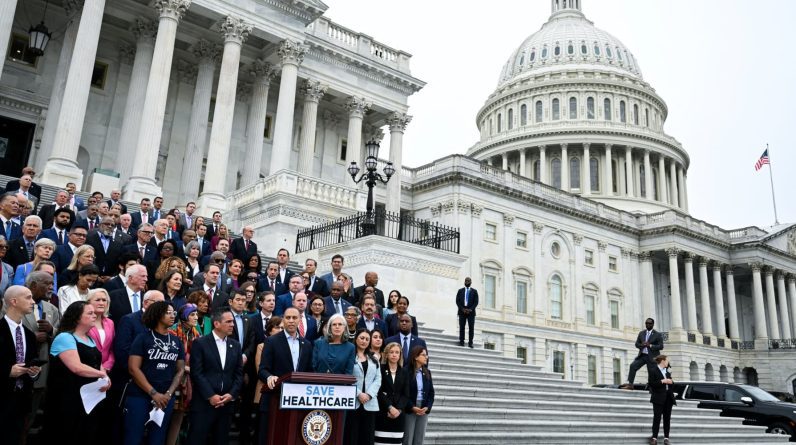
The ongoing government shutdown is largely driven by a heated debate over the Affordable Care Act (ACA), specifically the enhanced premium tax credits that have become a focal point of the political standoff. These subsidies, which have been instrumental in making health insurance more affordable for millions of Americans, are at the center of a contentious disagreement between Republicans and Democrats.
Republicans have accused Democrats of attempting to provide government benefits to undocumented immigrants, a claim that Democrats have strongly refuted. They argue that the issue is not about helping undocumented individuals but rather about restoring access to healthcare for those who are legally present in the United States. This dispute has escalated into a broader political battle, with both sides using strong rhetoric to frame their positions.
The federal government is on the brink of a shutdown at midnight unless lawmakers can reach an agreement. The core of the conflict revolves around whether the enhanced premium tax credits should be extended beyond 2025. These credits, introduced during the pandemic, have significantly reduced the cost of health insurance premiums for many Americans. According to researchers at the Kaiser Family Foundation (KFF), these credits have not only increased financial assistance for existing ACA Marketplace enrollees but also made middle-income individuals with incomes above 400% of the federal poverty level newly eligible for premium tax credits.
The majority of recipients of these enhanced credits are American citizens, with ACA plan enrollment doubling from 11 million to over 24 million since the credits were implemented. However, before President Donald Trump’s tax bill took effect, a small number of immigrants who were legally present in the U.S. also benefited from these subsidies.
Republicans have pointed to a Congressional Budget Office analysis suggesting that approximately 1.2 million non-citizens or undocumented immigrants would no longer receive Obamacare subsidies as a result of Trump’s tax bill. This figure has been used to justify their opposition to extending the subsidies. However, Democrats emphasize that their goal is to restore benefits for “lawfully present” immigrants, including those with temporary protected status due to refugee or asylum claims.
House Minority Leader Hakeem Jeffries has stated that federal law prohibits the use of taxpayer dollars to provide medical coverage to undocumented individuals. He asserts that nothing in the Democrats’ proposals aims to change this law. Instead, they seek to extend the tax credits for those who are legally present in the country.
Despite this, some Republicans argue that extending the subsidies would be too costly for the federal government. Rep. Andy Harris has claimed that the extension would cost hundreds of billions of dollars and is not feasible given the current fiscal situation. He has also criticized the policy as a relic of the pandemic era, stating, “Covid is over.”
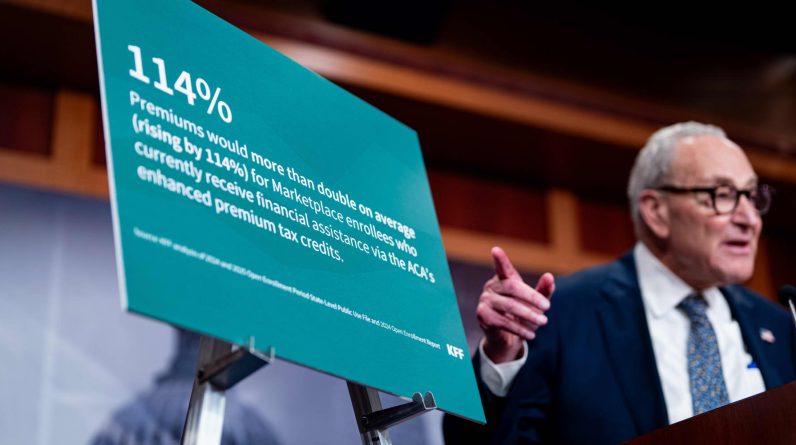
According to the Congressional Budget Office, extending the subsidies for a decade would cost an estimated $350 billion. If the credits expire at the end of this year, the average cost of health insurance for enrollees could more than double. For example, a family of four earning $130,000 could see their monthly premiums nearly double from $921 to $1,716. Such increases could lead to over four million Americans losing their insurance by 2034, according to a recent analysis by the Congressional Budget Office.
Key Points of the Debate
- Enhanced Premium Tax Credits: These credits, introduced during the pandemic, have helped reduce the cost of health insurance for millions of Americans.
- Eligibility Concerns: While most recipients are American citizens, a small number of legally present immigrants also benefited from the credits before Trump’s tax bill.
- Republican Opposition: Some Republicans argue that extending the subsidies would be too costly and that it would benefit undocumented immigrants.
- Democratic Position: Democrats aim to restore benefits for legally present immigrants while maintaining the prohibition on providing healthcare to undocumented individuals.
- Economic Impact: Extending the credits would cost $350 billion over a decade, but failing to do so could lead to significant price hikes and loss of coverage for millions.